
Simple Sam and the Creative Deadline
Stories about Simple Sam

When Brilliant Writers Produce Nothing
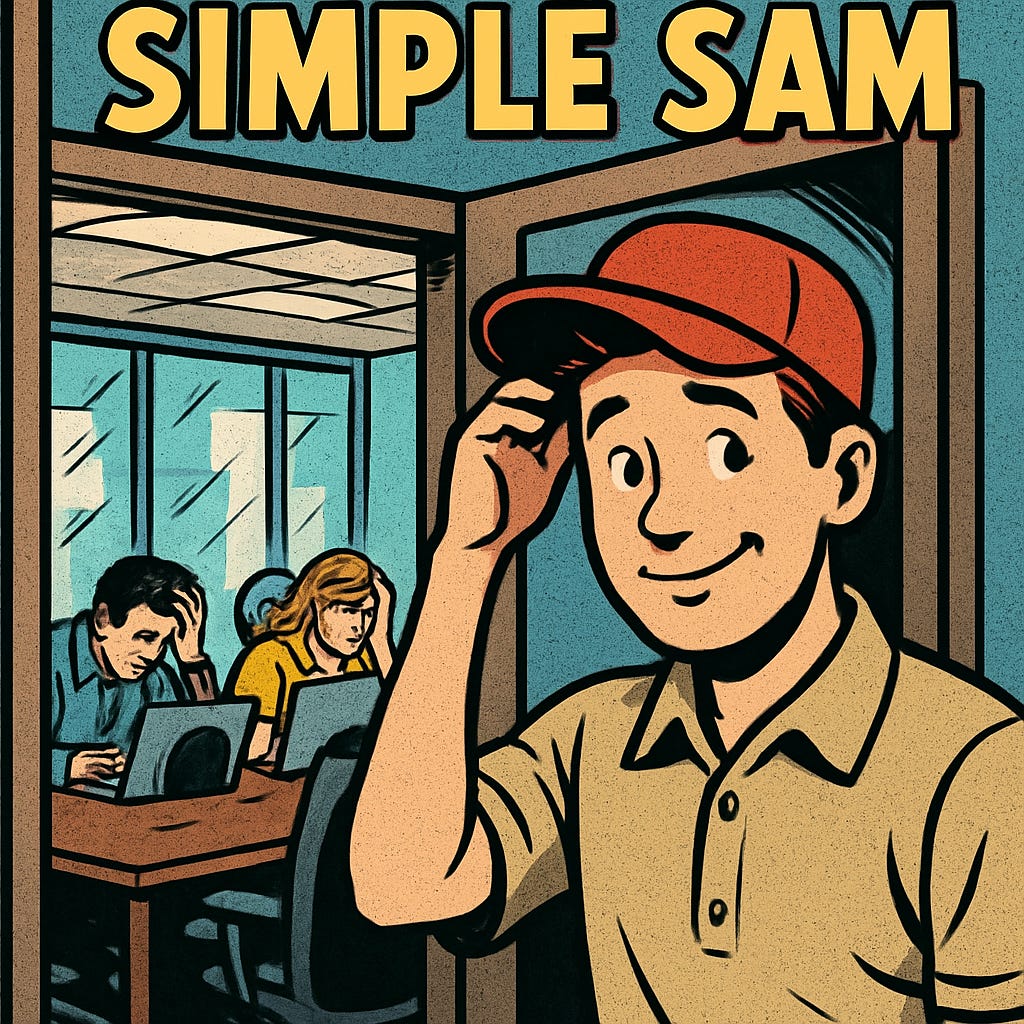
The conference room smelled like stale coffee and desperation.
Three copywriters sat hunched over laptops, surrounded by crumpled printouts and empty energy drink cans. Sarah had her head in her hands. Marcus was staring at his screen with the hollow eyes of someone who’d rewritten the same paragraph seventeen times. Jennifer kept typing, deleting, typing, deleting—a rhythm of futility.
The door opened. Everyone’s shoulders tensed.
Their boss, David Chen, walked in holding his phone like a weapon. “Well?”
“We’re working on it,” Sarah said weakly.
“Working on it? The client presentation is Friday. That’s two days.” He picked up one of the printouts, scanned it, dropped it back on the table. “This is... I don’t even know what this is.”
“We know it’s not—”
“It’s not good enough. That’s what it’s not.” David ran his hand through his hair. “You’re some of the best writers I know. What’s happening here?”
Nobody answered. What could they say? You’re standing over us demanding brilliance and it’s making everything worse?
“I need something by end of day. Something we can actually use.” He walked to the door, stopped. “And I’m checking in every hour.”
The door closed.
Marcus let out a long breath. “Well, that helped.”
“Let’s just... try again,” Jennifer said, but her voice had no conviction.
They turned back to their screens. The cursor blinked. Nothing came.
Twenty minutes later, the door opened again.
But it wasn’t David.
A man in his sixties stood in the doorway, wearing jeans and a flannel shirt that looked like it had seen better decades. He had kind eyes and a way of standing that suggested he was in no particular hurry.
“Sorry to interrupt,” he said. “I’m Sam. David asked me to stop by.”
The writers exchanged glances. Another consultant. Great.
Sam scratched his head, looking around the room. “Now this is interesting. You folks are writers, right?”
“Copywriters, yeah,” Sarah said carefully.
“Huh.” Sam pulled out a chair, sat down backwards on it. “Can I ask you something? When was the last time you wrote something you were actually proud of?”
Sarah blinked. That wasn’t the question she’d expected.
“I... there was this campaign I did last year. For a nonprofit. It just... worked, you know?”
“What made it work?”
“I don’t know, it just flowed. I believed in what they were doing, and the words came easily.”
“When did you write it?”
“Over a weekend, mostly. At a coffee shop.”
Sam nodded slowly. “And this project you’re working on now—”
The door banged open. David stood there, looking at Sam sitting casually while his writers weren’t typing.
“Sam, I appreciate you being here, but we’re on a deadline. They need to be working.”
Sam stood up easily. “You’re absolutely right. I was just curious about something, but—”
“I need copy on my desk, not storytelling.” David’s voice was tight. “Please.”
Sam nodded. “Of course.”
He walked to the door, paused, looked back at the writers with something like sympathy, and left.
David stood there a moment longer, then followed Sam out, closing the door behind him.
The writers looked at each other.
“Back to it,” Marcus said.
They tried. God, they tried.
Everything they wrote was still terrible.
The Unexpected Lesson in a Cup
Sam found David in his office an hour later, door closed, head down looking at reports.
“Got a minute?” Sam asked from the doorway.
David looked up, tense. “Sam, look, I know you have a reputation, and I respect that. But I’m not sure you understand the pressure I’m under. The client is—”
“I understand deadlines,” Sam said. “I do. But I was wondering—could I show you something? Won’t take long.”
David checked his watch. “How long?”
“Half hour. Maybe forty minutes.”
Every instinct in David’s body said no. He should be checking on the writers. Pushing harder. Making sure they were actually working.
But something in Sam’s face—that calm, curious expression—made him hesitate.
“Fine. Thirty minutes.”
The coffee shop was small, tucked into a side street David had driven past a hundred times without noticing. The kind of place with mismatched furniture and baristas who took their craft seriously.
“Sam?” David said as they walked in. “Why are we here?”
“Friend of mine runs this place. They’re doing a cupping today. Ever done one?”
“A what?”
A woman behind the counter waved at Sam. “Right on time! Come on back.”
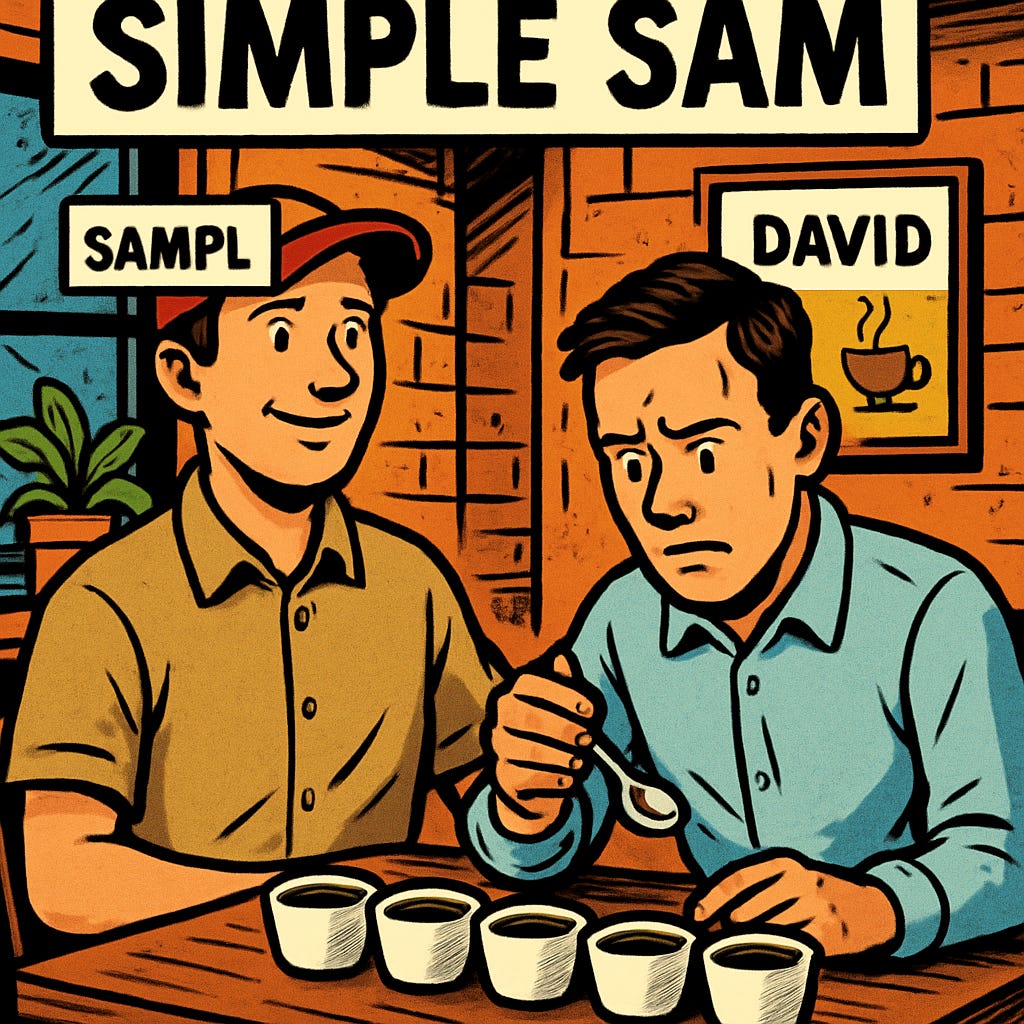
She led them to a small table in the back where five small cups of coffee sat in a row, along with spoons and a pitcher of water.
“This is a cupping,” she explained. “It’s how we taste coffee professionally. Evaluate different beans, roasts, origins.”
David checked his watch again. “I really don’t have time—”
“Just ten minutes,” Sam said. “Humor me.”
The woman began explaining the process. You smell the grounds. Add hot water, let it steep exactly four minutes. Break the crust that forms on top. Smell again at different temperatures. Then slurp—actually slurp—from the spoon to aerate the coffee across your palate.
David tried to rush it. “Okay, that one’s good, let’s—”
“Well, hang on,” she said gently. “You haven’t tasted it at the right temperature yet. The flavors change as it cools. This one won’t show its brightness until it hits about 160 degrees.”
David shifted in his seat. Waiting. Watching the steam rise.
They went through each cup. Slowly. Patiently. The woman explained what to notice—acidity, body, sweetness, finish. How you couldn’t rush it. How forcing a quick judgment would give you the wrong answer.
“The thing about tasting,” she said, “is that pressure actually makes you worse at it. When you’re tense, your palate tenses too. You miss things.”
David realized he was holding his shoulders up around his ears. He consciously lowered them.
By the time they finished, something in his chest had loosened slightly.
“Thanks, Lisa,” Sam said as they left.
Back on the street, David turned to Sam. “That was... nice. But I’m not sure what it has to do with—”
“Let me ask you something,” Sam said. “Could Lisa have done that cupping faster? Like, if you’d demanded she tell you which coffee was best in two minutes?”
“I mean, she could have picked one—”
“But would she have been right?”
David was quiet.
“See, that’s the thing,” Sam said. “Some processes, you can speed up. Add more people, work longer hours, push harder. But some processes...” He scratched his head. “Some processes break when you do that. You get worse results, not faster ones.”
They started walking back to the car.
“You play guitar at all?” Sam asked suddenly.
“A little. Why?”
“There’s a shop right around the corner. Mind if we stop in?”
The Song That Almost Never Happened
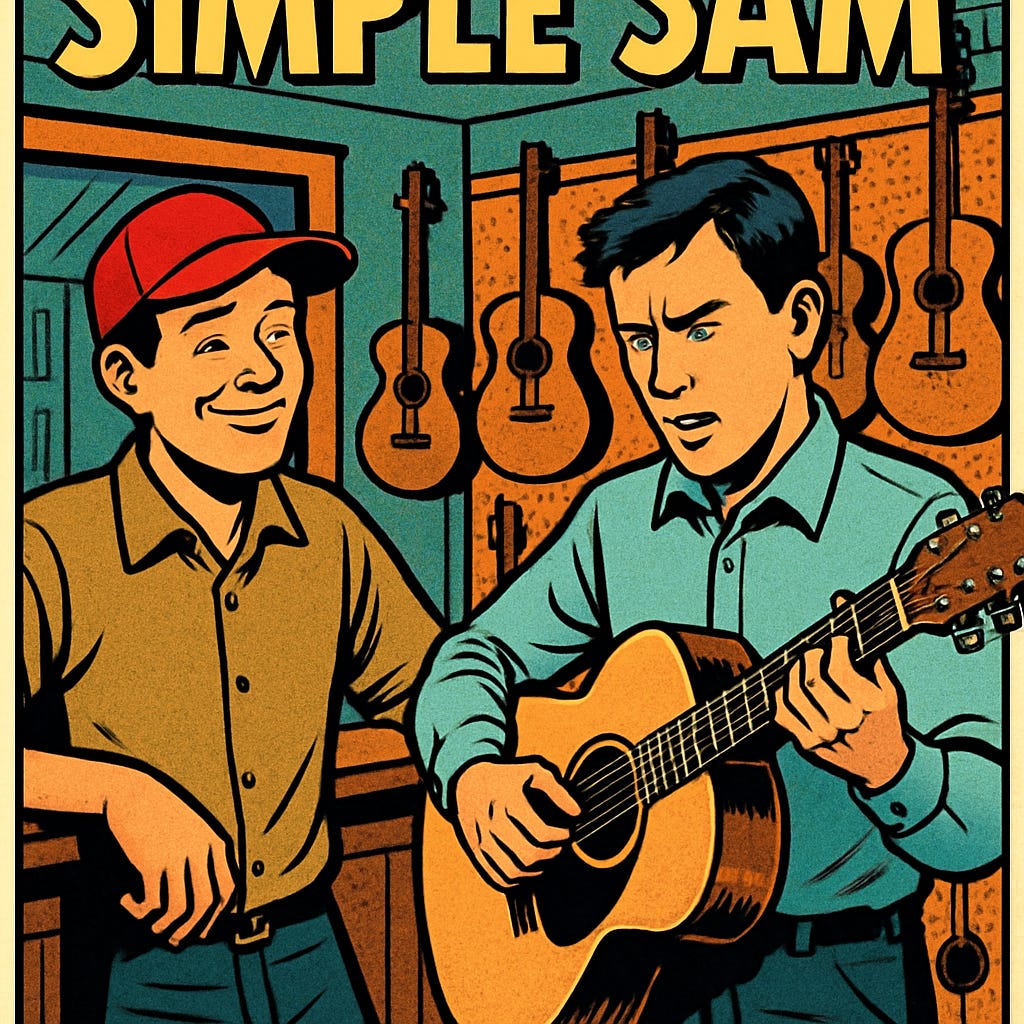
The guitar shop was quiet, lined with instruments hanging on the walls like art. Someone was noodling on an acoustic in the corner.
Sam picked a Martin off the wall, handed it to David. “I heard you play a little.”
“Sam, I really don’t have time—”
“Just a few notes. Humor me.”
David took the guitar. Despite himself, despite the deadline screaming in his head, his hands found the familiar position. He started playing the opening notes to “Stairway to Heaven.”
The arpeggios rang out clear and pure. His fingers knew exactly where to go. For a moment—just a moment—David wasn’t thinking about the deadline or the writers or the client presentation.
He was just... playing.
He made it through the intro and stopped, lowering the guitar. “Never learned the rest.”
“But you know that solo,” Sam said. “Don’t you?”
David’s face lit up. “God, yes. That solo. Page’s tone, the phrasing, the way it builds—it’s perfect.”
“You know how that came together?”
David shook his head.
Sam settled against the counter. “They recorded it at this old house called Headley Grange. Away from the studio. No executives. No pressure. Just the band and a mobile recording setup. And once they had that space—that right environment—the song just flowed. Plant wrote those lyrics in one sitting.”
David was listening now. Really listening.
“And here’s the wild part,” Sam continued. “Even after they made it—this song you love, this generational song—the radio stations almost didn’t play it. Too long. Too different. Didn’t fit the format. So the band had to get in a car and drive station to station across the UK, asking them to give it a chance.”
Sam paused.
“And even then? It took years before people really got it. Years. But they trusted what they’d made because they knew the conditions had been right when they created it.”
David stood there holding the guitar, thinking about his favorite song almost not existing. Or existing but watered down because someone had demanded it be “more commercial” or “done faster.”
“Your writers back there,” Sam said quietly. “They’re talented. You know that. They just need what Page and Plant needed. The right environment. The space to let it flow.”
David handed the guitar back carefully. “Sam, I get what you’re saying, I do. But this is the real world. We have clients. Deadlines. I can’t just tell them ‘take all the time you need.’”
Sam nodded. “You’re right. Deadlines are real.”
He seemed to think for a moment.
“Can I ask you something? You ever watch the Olympics? Track and field?”
What Olympic Runners Know That You Don’t
They were walking back to the office now. David nodded, not sure where this was going.
“So you’ve got these runners,” Sam said. “100-meter dash. The whole thing’s over in what, ten seconds? There’s a deadline—the race. The gun goes off, you run, you either win or you don’t. Can’t be more deadline than that, right?”
“Right...”
“But here’s the thing—before that race, those athletes have been training for years. Late nights in the gym. Early mornings on the track. Proper nutrition, rest, technique work. All that preparation nobody sees.”
Sam stopped walking. David stopped too.
“On race day, there’s a deadline,” Sam said. “But right before the gun goes off? They’re not cramped up. They’re loose. Focused. In the blocks, breathing, ready. And when the race happens, they’re not thinking about winning—they’re just running. The performance flows because they did the prep and had the right conditions.”
He looked at David directly.
“Your writers? They’ve got the training. They’ve got the talent. But right now, you’ve got them in the blocks with you yelling ‘RUN FASTER’ before the gun’s even gone off. The deadline is real. The race is Friday. But they need the right conditions so when it’s time to perform, it just... flows.”
David stood on the sidewalk, people walking around them.
He thought about the coffee cupping. How pressure made you taste worse.
He thought about Stairway to Heaven. How it needed Headley Grange. How even then, it took time for people to recognize what it was.
He thought about those runners. Loose. Ready. Trusting their training.
He thought about Sarah saying that nonprofit campaign had just “flowed” when she wrote it over a weekend at a coffee shop.
“Geesh,” he said quietly. “I’ve been making it worse.”
Sam didn’t say anything. Just stood there.
“I’ve been standing over them, checking in every hour, and I’ve been making it worse.”
“You were trying to help,” Sam said. “But yeah.”
David started walking again, faster now. “So what do I do?”
“Well,” Sam said, “I’m just wondering... what would those runners need right before the race?”
David thought about it. “Space. Calm. Trust that they’ve done the work.”
“Might be worth asking your writers what they need.”
The Hardest Thing a Leader Can Do
David walked into the conference room. The three writers looked up, bracing for impact.
But David just stopped. Looked at them.
“What do you need?”
They blinked.
“What?”
“To do this right. What do you actually need?”
Sarah exchanged glances with the others. “Coffee? Good coffee, not the break room stuff.”
“Done. What else?”
Marcus spoke up hesitantly. “Honestly? Some music. And maybe... I don’t know, a whiteboard to sketch ideas?”
“What kind of music?”
“Just... something instrumental. Helps me think.”
Jennifer added, “I think better when I can move around. Maybe take a walk?”
David nodded at each one. “Okay. Anything else?”
Marcus half-joked, “A ping pong table?”
Everyone tensed. Here’s where he’d snap, tell them this wasn’t playtime—
“I’ll have one here tomorrow,” David said evenly. “Today, use the conference room, move around, whatever you need. I’ll get speakers set up in twenty minutes.”
He pulled out his phone, texted someone. “There’s a coffee roaster three blocks away. They’ll deliver. Whiteboard’s in the other conference room—I’ll have it moved.”
The writers stared at him.
“I’m leaving,” David said. Then, and this was the hardest part: “Take the afternoon. Tonight if you need it. The deadline’s still Friday, but you know that. You know what you’re doing.”
He walked toward the door, stopped, turned back.
“I trust you.”
And he left.
Sam was waiting by the elevators.
They rode down in silence. Walked to David’s car. David looked back at the building, up at the windows of the conference room.
“You think they’ll...?” he started.
Sam scratched his head, smiled a little. “I think you just gave them what Page and Plant had. What those Olympic runners have right before the gun goes off.”
David nodded slowly. His hands were shaking slightly. This was hard—leaving, trusting, not controlling.
“It’s hard,” he admitted. “Not being in there.”
“I know it is,” Sam said. “But you just did the hardest part of leadership.”
Through the windows above, they could see movement. Someone was standing up. Another person was at the whiteboard. There was energy now, not panic.
Different energy.
Sam was watching David more than the writers. Seeing him resist the urge to go back in. Seeing him trust.
“They’re gonna be alright,” Sam said quietly.
David took a breath. Let it out.
He believed him.
Two days later, David would sit in a conference room watching his writers present to the client. The work was good. Really good. The kind of good that happens when talented people have the right conditions to remember what they already know how to do.
But right now, in this moment, standing in the parking lot with Sam, he was learning something more important than any single campaign:
You can’t force flow. You can only create the conditions for it.
The rest—like Stairway to Heaven, like an Olympic race, like a perfect cup of coffee—happens when the moment is right.
END